Just a few steps from the shore, in the calm waters near Elounda, lies one of Crete’s most fascinating archaeological sites: Olus, also known as Olous, the ancient sunken city. When the sea is still, you can see traces of its streets, walls, and buildings shimmering beneath the surface — silent witnesses of a once-thriving world.
A city lost to the sea
Thousands of years ago, Olous was a flourishing Dorian city-state, connected to the great maritime routes of the eastern Mediterranean. It minted its own coins, often showing the goddess Britomartis and Zeus Tallaios, symbols of protection and divine strength. The city traded with neighbors such as Lato and Rhodes and was known for its skilled craftsmen and seafarers.
Over time, seismic activity caused parts of the city to sink — perhaps during one of Crete’s great earthquakes around the 2nd century AD. What remained slowly disappeared beneath the waves, leaving behind mosaics, marble fragments, and ancient inscriptions now preserved in the Archaeological Museum of Agios Nikolaos.
Where history meets the sea
Today, you can literally swim above history. The shallow bay makes Olous a perfect place for snorkeling: walls and foundations rest just below the surface, clearly visible when the water is calm and the light falls just right. With a mask and fins, you glide through a place where ancient merchants once walked and where the sea now tells their story.
My tips if you want to experience Olous and more
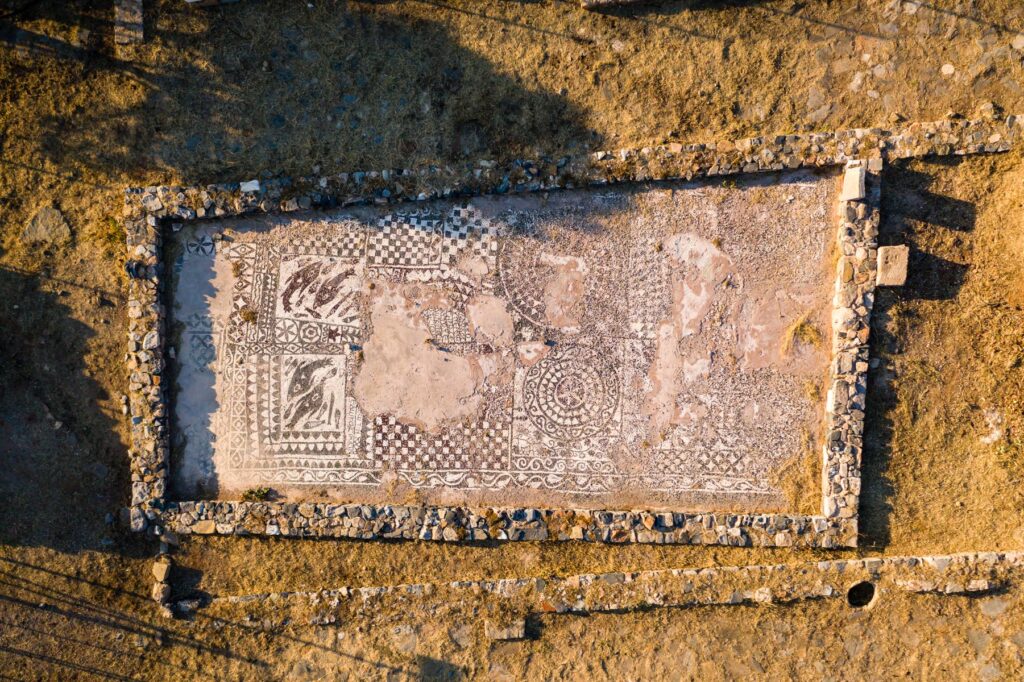
If you follow the narrow strip of land connecting Elounda with the Kolokytha peninsula, you’ll find the ruins of an early Christian basilica, its mosaic floors still showing delicate patterns of fish, birds, and symbols of faith. Nearby stands the small Chapel of Análipsis (Ascension) — swim out from there, and you may spot the outlines of submerged walls leading toward the lost city.
From Olous, you can also spot two old stone windmills standing quietly on the isthmus. Why — and how — they made it all the way to Hollywood is another story. You can look it up, or simply ask about it when you have dinner at the Moonspinner restaurant. They’ll know.
And if you’re in the mood for a walk: continue your adventure on Kolokytha Island. The path starts right near the ruins and leads through wild nature with views of Mirabello Bay.
Just one tip from experience — wear long trousers and sturdy shoes. The path can get rocky in parts, and you’ll pass a few thorny bushes along the way. If you’d like to know more about the hiking trail, click [here]. It’s absolutely worth it.